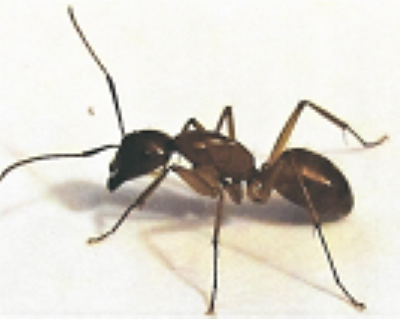
The German Cockroach (most common cockroach found in home & business)
The German Cockroach
( Blattella germanica)
The German cockroach is the most common and widespread household cockroach. Adults are ½ to 5/8 inch long and have light brown to tan bodies. There are two dark brown stripes on the pronotum, running from front to back. Both adults males and females have well-developed wings, but they do not fly.
Cockroaches are most common in areas of the house in which there are abundant food and water, high humidity, and safe harborage. They are usually found in kitchens and bathrooms. However, they may invade other rooms if sanitation is poor or if the population gets very large.
German cockroaches are active at night, searching for food and water. Small nymphs usually remain within harborages, foraging for food scrapes there. Newly hatched nymphs must also feed on cockroach feces. Seeing adults or nymphs during the day is a clue that the population is large.
While females are producing and carrying an egg case, they are inactive. They rarely feed or seek water and remain hidden. This behavior tends to protect them and their young from pest control efforts.
German cockroahes have small yellowish and brown egg cases. A German cockroach egg case contains from 30 to 40 eggs. The females carries the egg case on the tip of her abdomen until about 24 hours before the eggs are ready to hatch. Then, she drops the egg case and leave the nymphs to fend for themselves. An adult female lives for about six months. On average, she will produce one egg case a month, or about 150 to 240 nymphs in all. The average life cycle is about 100 days under favaorable conditions.
What Method Needed To Control German Cockroaches?
At H. L. Cooper Pest Control, for infestaions we apply a residual insecticide to crack & crevices, baseboards, under sinks, beneath and behind stoves & refrigerators, cabinets, around windows & doors frames and uitlites installations . In some cases, a dust and or bait is apply to harborage. Bait won’t work if residual insecticide is applied on it. This residual will last about 30 days. A flushing agent (fogging) is apply which kills on contact and penetrate harborage. The goal is to kill over 95% of the population during the initial cleanout. Since females producing and carrying egg cases are inactive and remain hidden, a follow-up treatments is need in 30 days. Many time it looks as if pest control effort did not work because nymphs are seen a few weeks after treatment. This is a normal part of the pest control process. The second and sometime a third treatment is needed to eliminate this problem. But, re-infestation can and will occur if new German cockroaches are being re-introduce back into treatment area. Apartment units can have this problem, but preventive treatment to units on either side of the troubled unit solves this problem.
Recent Posts